Five Years, A Jewelry Dream, and How Shopify Left Me With Nothing
A honest account of what it’s really like to be a small, loyal Shopify merchant — and what happened when I couldn’t pay one bill.
It started the way most side projects do: a kitchen table, a pair of pliers, and a stubborn belief that the things I was making were worth sharing with the world.
I was making jewelry. Nothing extravagant — small, handcrafted pieces. Delicate rings, layered necklaces, earrings I’d assemble on weekend afternoons while listening to podcasts. I wasn’t trying to build an empire. I just wanted a place where people who liked the same things I liked could find them, buy them, and maybe feel something when they wore them. A hobby that paid for itself. A small, quiet corner of the internet that was mine.
So I signed up for Shopify.
The Early Days: A Platform That Promised Everything
When I first opened my Shopify store, I was genuinely impressed. The interface was clean, the templates were beautiful, and setting up a product listing felt almost satisfying — like arranging a tiny digital shop window. I uploaded my first product photos on a Sunday afternoon, and by evening I had a functioning online store. For a solo maker with no technical background, that felt like magic.
I chose Shopify because everyone said it was the best. And in many ways, it was. The checkout experience was smooth, the payment processing worked reliably, and when I had questions, support was usually helpful. I paid my monthly subscription without complaint — month after month, for five years. Not because I was making serious money. Honestly, my jewelry store was never going to make me rich. It covered the cost of materials, a little extra, and gave me something I genuinely loved doing. That was the whole point.
Over those five years, I built something I was proud of. A small but loyal customer base. A mailing list full of people who had actually bought from me, who opened my emails, who sometimes sent me photos of themselves wearing my pieces at weddings or on holidays. I refined my photography. I wrote product descriptions I actually liked. I updated my store design season by season. I treated it like a real business, even if the numbers never quite looked like one.
And every month, Shopify took their cut. I paid it. Because that’s what you do when you’re a customer.
A Difficult Season, One Missed Bill
Life happens. I won’t go into details, because they’re not the point. What matters is that there was a period — a hard one — where money was tight and I missed a payment to Shopify. Just one. One billing cycle where I didn’t have the funds lined up in time.
I thought it would be a minor inconvenience. I’d pay it as soon as I could, and things would go back to normal.
What actually happened was something else entirely.
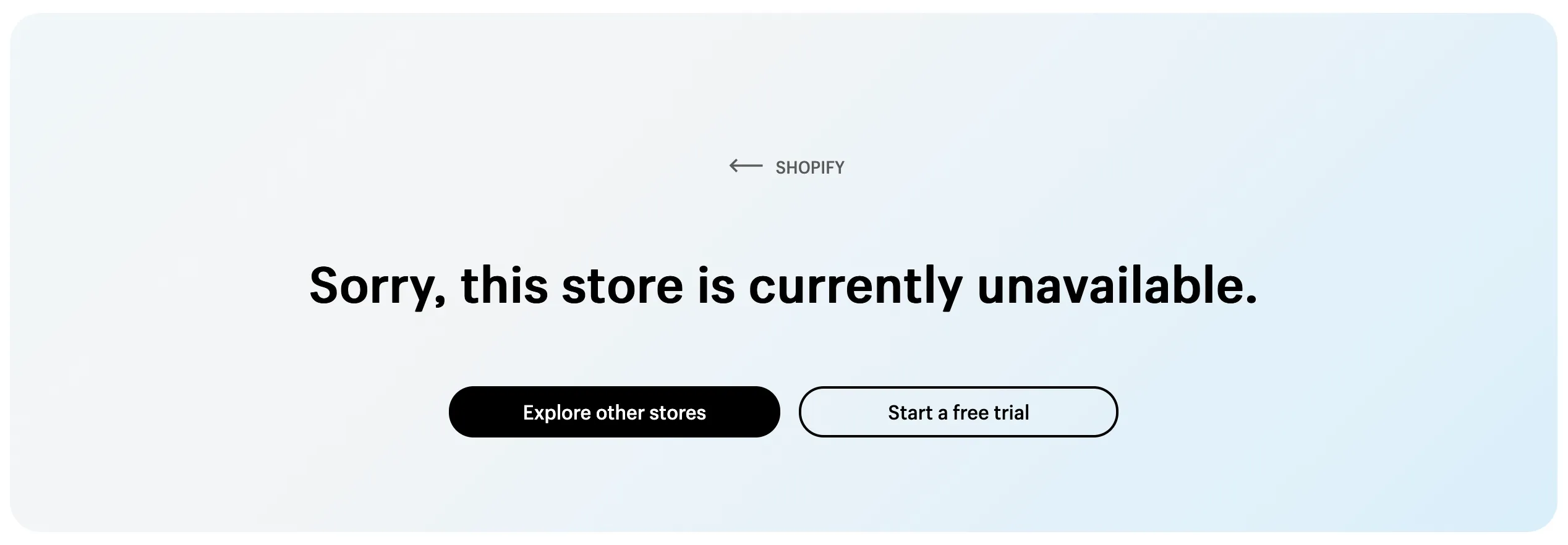
Shopify froze my store. Immediately. Not a grace period, not a warning email asking if everything was okay — just a frozen account. My storefront disappeared. My admin access was cut off. Five years of product listings, customer records, photography, copy, and — most critically — my entire customer mailing list: gone behind a wall I couldn’t access.
I understood, on some level, that this was within their rights. A business has to protect itself. But what I didn’t expect — what I genuinely could not believe — was what came next.
Trying to Get My Own Property Back
Even if the store had to stay frozen, I figured I could at least transfer my domain and get my customer data out. These things belong to me. The domain is registered in my name. The mailing list is made up of people who signed up to hear from me — not from Shopify. They’re my customers.
I contacted Shopify Support and explained the situation. I was polite. I was patient. I went back and forth with their support team over multiple conversations, and I watched my request get escalated, reviewed, re-reviewed, and ultimately denied — again and again.
Shopify’s position, stated plainly: you cannot transfer your domain or access your data until you pay the outstanding invoice. Full stop.
I tried to explain that a domain is my property and that withholding a domain transfer over a billing dispute may not align with ICANN’s Inter-Registrar Transfer Policy — the international rules that govern how domain registrars are supposed to behave. I asked for a case reference number. I asked for escalation to their legal and compliance team. I asked for written confirmation of their position.
I received sympathetic responses from support agents who clearly wanted to help but had no authority to do so. I never received a case number. I never received confirmation of escalation. And I never received my domain transfer code or my data.
What This Means for a Small Creator
Let me put this in plain terms, because I think it gets lost when you’re talking about policies and transfer codes and ICANN complaints.
I spent five years building relationships with my customers. People who trusted me with their email addresses, who looked forward to hearing about new collections, who came back and bought again. That list isn’t a database to me — it’s a community. Real people who chose to stay connected.
Shopify is holding that community hostage.
Not because they have any claim to it. Not because they built it. But because the technical architecture of their platform makes it impossible for me to retrieve it while my account is frozen — and they have chosen not to make any exception, even for a customer of five years, even for data that is unambiguously mine.
I’ve since learned I’m not alone. Stories like mine exist all across forums, Reddit threads, and support communities. Small merchants — makers, creators, side-hustlers — who found themselves locked out, their stores frozen, their data inaccessible, their domains stuck. The platform that promised to empower small businesses turns out to have a very different face when the relationship sours.
Where Things Stand Now
I am currently pursuing this through formal channels. I have referenced ICANN’s Inter-Registrar Transfer Policy in my correspondence with Shopify. I have raised concerns about the withholding of my customer data under the California Consumer Privacy Act (CCPA). I have requested escalation to Shopify’s legal and compliance team.
Whether any of that ultimately works, I genuinely don’t know. What I do know is that I am documenting everything, I am not giving up, and I am no longer willing to let this experience exist only in a support chat thread that nobody else can see.
If you’re a small business owner considering Shopify — especially if you’re a maker, a creative, a side-hustler who just wants a simple, reliable platform — I want you to read this first. Make sure you understand what the relationship looks like when things go wrong. Download your data regularly. Keep backups of your mailing list. Don’t assume that because you’ve been a loyal customer for years, that loyalty will be remembered when you need it most.
A New Beginning (And a Favour to Ask)
Despite all of this, I’m still here. Still making jewelry. Still wanting to share it with people who might love it.
This website is new. I built it outside of Shopify, and this time, I own everything on it — including the mailing list.
Which brings me to the favour.
Because Shopify is still holding my customer data, I’ve lost access to the list of everyone who ever signed up to hear from me. If you’re reading this and you were once a subscriber, a customer, or just someone who liked what I made — I’d love to have you back. No hard feelings if life has moved on. But if you want to be here for what comes next, please sign up below.
I promise: your email stays with me. Not with any platform. Not behind any paywall. Just mine, and yours.
Thank you for reading. Thank you for being here. And if you’ve been through something similar with Shopify or any other platform — reach out. You’re not alone either.
– [Your Name]
[Your Store Name] | Los Angeles, CA
💌 Join the Newsletter
Shopify took my list. Let’s rebuild it together.
Sign up below to be the first to hear about new collections, behind-the-scenes making, and the occasional honest thought about running a tiny creative business.
Filed under: Shopify review, small business, jewelry maker, domain transfer, CCPA, creator rights